


How long does it take to refurbish a machine tool, and what is it worth?
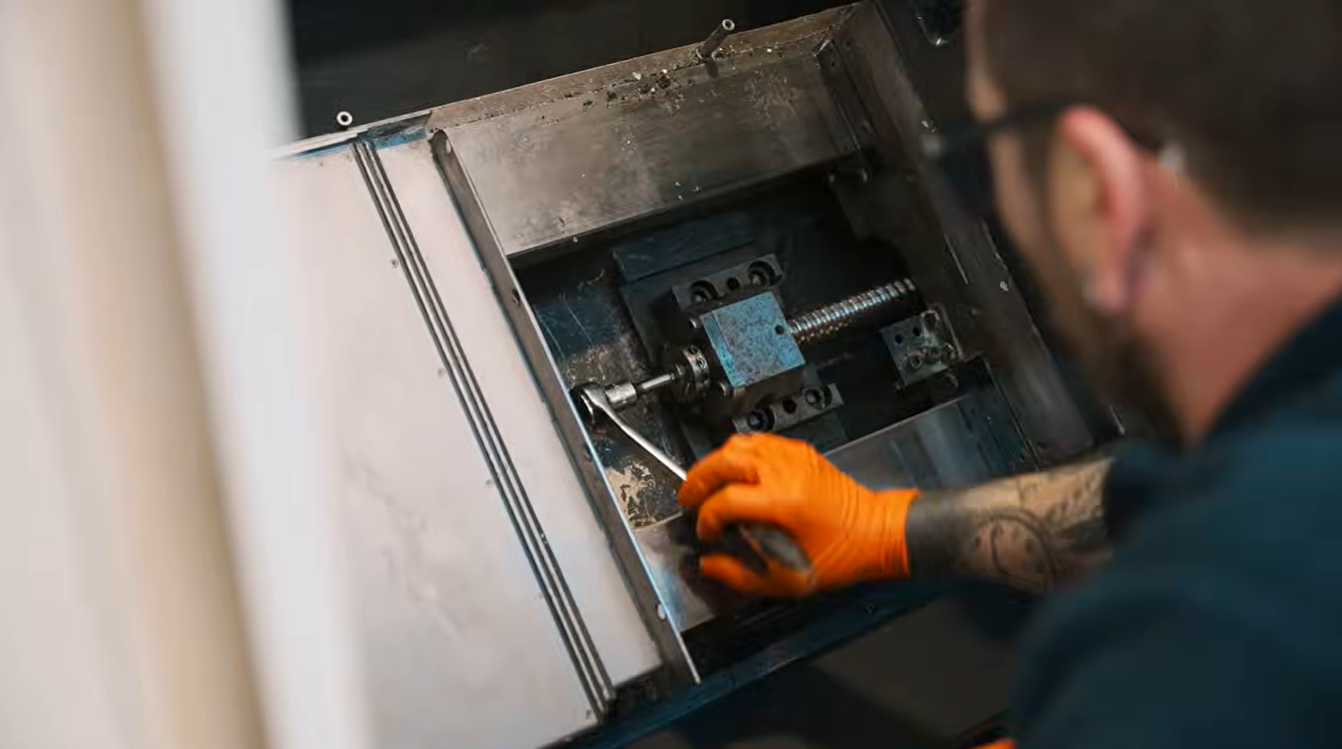
Anyone purchasing a used and refurbished machine tool needs to know not only its price, but also when it will be ready for production. However, the delivery date depends on what the machine actually requires: a lathe with limited faults and readily available spare parts does not involve the same amount of work as a CNC machining centre that needs to be dismantled before several components can be restored. Even two machines that are identical on paper may turn out to be in very different conditions in practice.
We start by inspecting the machine in order to define a refurbishment process that may include checks, restoration work and testing. There is no standard number of days that applies to every job. Instead, there is a sequence of activities to be assessed, distinguishing those already scheduled from those that depend on the results of the initial diagnosis. Understanding this difference is useful both for estimating the time required and for assessing the value of the work.
Before refurbishment: site inspection, collection and diagnosis
The initial assessment takes place during an inspection at the owner's premises. If the machine is operational, it is possible to gather information about its movements, spindle behaviour and any alarms. If it has been disconnected, some checks will have to wait. Manuals, maintenance records and documentation of previous interventions help reduce uncertainty, but they do not always provide a complete picture of the condition of internal components.
Before refurbishment, it may also be necessary to organise disinstallation, preparation and transport. A heavy machining centre located in a facility with difficult access requires more complex operations than a smaller machine that is already ready to be moved. These activities affect the delivery schedule, even though they are not part of the actual work involved in restoring mechanical and electronic components.
A more accurate diagnosis is carried out once the machine has arrived at our facility. As part of the process a used machine goes through at RIKI, inspections are followed by any necessary dismantling, repairs, reassembly and final checks. It is mainly after this assessment that we can distinguish between work already defined and work that may still depend on further findings.
How to establish a reliable refurbishment schedule
Let's consider a used lathe that, during the initial inspection, shows a seal leak and requires an inspection of its axes. If the seal is available, its replacement can be scheduled alongside the planned checks. However, dismantling may reveal a worn bearing. At that point, the bearing must be identified and sourced, and the affected components must be inspected before reassembly. Final testing will therefore be delayed, even though the initial work had been scheduled correctly.
This example is purely illustrative, of course, but it shows why a schedule depends on three interconnected stages. The diagnosis establishes what work is required; the restoration stage includes spare parts, dismantling and reassembly; testing verifies whether the machine has recovered the required operating conditions. Some operations can proceed while waiting for components, whereas others must stop until the necessary part arrives.
Final testing can also affect the schedule. If an accuracy defect appears during a test machining operation, its cause must be identified, the necessary corrective work carried out and the test repeated. Completing the assembly does not mean that refurbishment is finished.
Anyone who needs to organise production orders therefore needs to know which inspections have been completed, which spare parts are available, which interventions remain to be carried out and when the machine can be tested. Once the diagnosis has been completed, this information allows a more reliable estimate than any standard timeframe generically assigned to lathes or machining centres.
The value of refurbishment lies in the conditions restored
The hours spent and the components replaced explain the cost of the work, but they do not fully account for its value. Refurbishment is worthwhile when it restores the machine to operating and accuracy conditions suitable for the work its future owner intends to carry out. This requires linking the problems identified to the work performed and to the tests used to verify the results.
A used machine may prove more cost-effective than a new model if it offers the required performance and keeps operating costs at a sustainable level. However, this is not always the case. If the machining operations require a configuration, automation system or capacity that the original machine does not have, replacing worn components will not eliminate that limitation. Likewise, extensive refurbishment may not be economically viable if the machine has a low residual value or its spare parts are difficult to source.
The comparison must therefore take into account not only the purchase price, but also verifiable performance, production continuity, availability of technical support and the actual work to be carried out. This is where refurbishment gains its value: it allows a machine that is still useful to return to service in a known condition, rather than simply giving it a better external appearance.
Delivery and production start-up: other timescales to consider
Finally, there is an essential distinction for anyone planning a production order: a refurbished machine, a delivered machine and a machine ready for production do not necessarily correspond to the same date. After testing at the supplier's premises, transport, positioning, connections, realignment and further testing at the customer's site may still be required, in addition to the preparation of tools and programmes.
Refurbishment and testing activities must therefore be included in the overall schedule, together with transportation and recommissioning at the final destination. Agreeing on these stages in advance makes it possible to establish which date is actually relevant for resuming production.